
There was already a sizeable queue outside Pilgrim when I arrived on Saturday evening. The Newcastle venue, known for its jazz, funk and soul eventing, had sold out for Brian Jackson’s intimate return, following an equally packed appearance back in 2025.
I had been fortunate enough to catch some of the soundcheck earlier in the evening, when the room was pretty much empty, and even then, it was clear that something special was coming. The musicians appeared relaxed, but the music already filled every crevice of this fabulously intimate space. By the time the doors opened and the audience poured in, that early promise of the night to come had become an unmistakable current of anticipation.
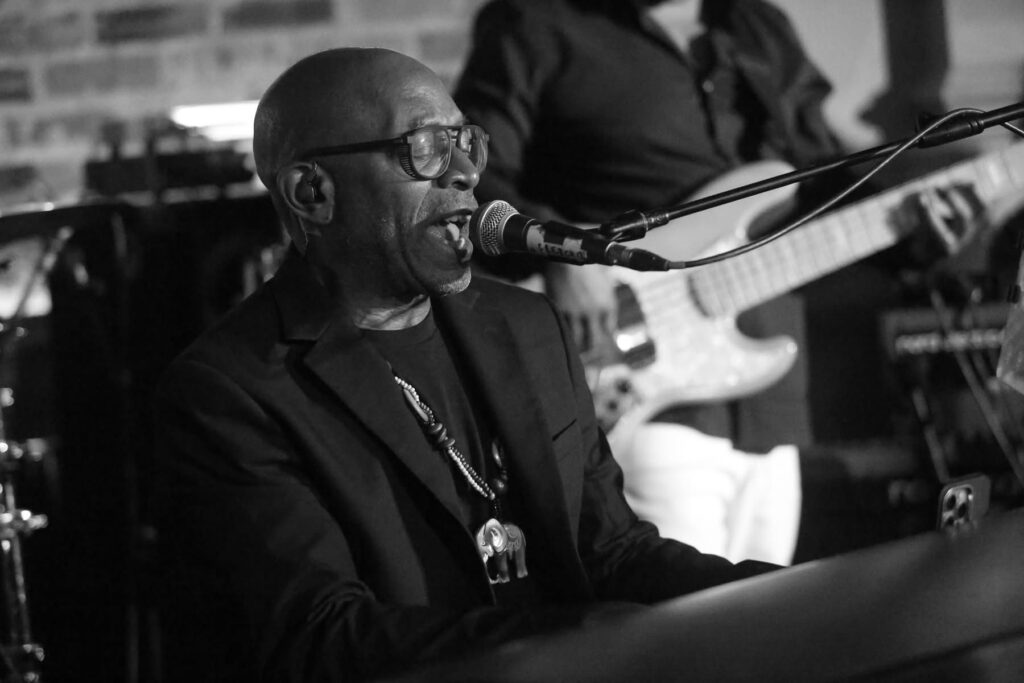
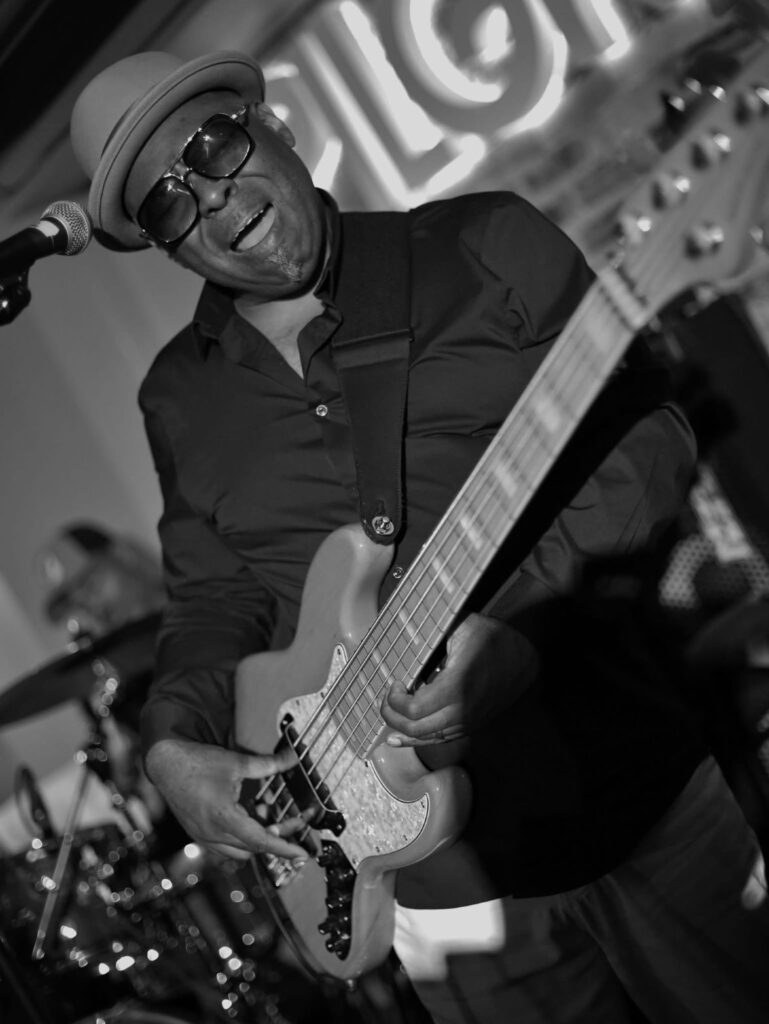
Appearing on stage just after 9.30pm, Brian was seated centre stage behind the iconic Rhodes keyboard so integral to his sound. Joining him were musical director Lennox ‘Lex’ Cameron, moving effortlessly between guitar, keyboards, flute and vocals; Dean Mark, king of the bass; Paul Jones on relentlessly brilliant drums; and Sara Madaluni on phenomenal keyboards. Calling them a backing band would do each musician a disservice, as this band was a collective of extraordinary players in their own right, brought together around Brian’s original and reworked catalogue, but each given the freedom and space during the performance to make their own mark upon it.
Before the show, I spoke briefly with Dean about how he had come to play with Brian on this tour. The call, he said, had initially come from Lex, and after one performance, he was in. Dean described himself and Brian as coming from “the same music stock”, something that became immediately apparent once they began playing together; a shared musical language and unconscious instinct that no amount of rehearsal entirely explains. His bass supplied both weight and movement throughout the evening, anchoring the songs without ever restricting where they might travel, and a delightful, full-of-groove interlude later in the set demonstrated exactly why he has the reputation he does, sending the room into an absolute furore.
Brian’s creative partnership with Gil Scott-Heron was acknowledged from the very start, their work together remaining one of the most important and influential bodies of socially conscious music to emerge from the 1970s. But the soundtrack to this evening was never presented as a memorial or an indulgence. Gil Scott-Heron‘s presence and contribution to that creative alliance were recognised with warmth and respect, while the songs themselves had been allowed to move, change and continue living, re-emerging as anthems for the world we inhabit now.
The audience had undoubtedly come carrying affection for the original recordings, but there was equal delight in hearing what the material could become in the hands of one of its original architects and this particular band. These were not museum-piece reproductions or presentations preserved behind glass, they were flexed, exploratory and frequently very funky new versions of songs whose observations remain alarmingly relevant despite the several decades between then and now.
Brian Jackson has described his work as ‘conscious soul’, a phrase that perfectly captures music capable of making the body move whilst asking the mind to remain alert and active. The political and social messages have sadly lost none of their urgency, but neither has the pleasure that is clearly built into the music around them. Brian has spoken in the past, and remarked on the night, of the genuine joy he had found in reimagining these songs with a remarkable group of collaborators, creating work that respects the originals while allowing other musical minds to reshape them.
From the earliest songs, Brian demonstrated immense generosity towards his band that shared the stage. During one of the first extended instrumental passages, he stepped back and allowed the conversation between drums, bass and keys to take over. At other points, individual musicians were spotlighted for solos, Brian watching, listening and giving them room rather than continually asserting himself at the centre of the evening. Fascinatingly, a small movement of his hand could signal the final bar of a sprawling jam, and moments later the band were bringing the temperature right down, shifting from exhilarating funk into something quieter and more contemplative and without losing the audience for a second.
During “Lady Day and John Coltrane”, Sara was soon out of her seat, visibly absorbed in the music unfolding around her, playing with a joy undiminished by however many times she must have performed the track before. Lex easily moved between keyboards, flute, vocals and scatting, at one stage accompanying his own playing with a vocal performance that was simply astonishing. Paul Jones behind the drums was equally commanding, leading the band but also flexing as the musicality found its own path. All of this topped with Brian’s voice; low, warm and velvet-rich, carrying experience without having lost any of its intimacy, sometimes supported by Lex, Dean and Sara, but often just left to hold the room on its own.
The music from his recent album, ‘Now More Than Ever’, allowed past and present to meet, with Brian acknowledging Masters at Work, Louie Vega and Kenny Dope, whose involvement has helped to rework parts of the catalogue for a new era. The production may have evolved and the tech may be different, but the substance of the songs remains intact, and their continued relevance is something to be celebrated, albeit with a heavy heart at times. It is extraordinary that the music still speaks so directly to the present, but also deeply troubling that so many of the conditions it addressed have endured.
Brian also spoke about working with Yussef Dayes and the process of returning to the studio when an early version of their collaboration sounded, in his own wonderfully direct assessment, “too ’80s”. It was one of several glimpses into his creative process, demonstrating an artist who respects his history without becoming trapped by it. His seriousness about the work was balanced by a dry and occasionally wicked sense of humour. He praised each musician, but also recognised the role of the audience, saying to the room “It doesn’t happen without you,” he said, before adding, “But you have to have someone to give it up to.” That interplay between performers and audience became increasingly relaxed as the evening progressed; this was not music simply delivered from stage to floor, it moved back and forth between us.
Around an hour into the set, the mood became more reflective with Brian introducing a song dedicated to what he described as the ‘slow death of a nation’. Before launching into playing “Winter in America”, he spoke about change, political winters and the possibility of spring. “The only thing in life that never changes is change,” he said. “When you have a winter, there’s always a spring.” Followed with the more exasperated question of “how long does it f****** take to arrive?” His answer was neither passive nor comfortably optimistic, but it was an appeal; if people want change to come more quickly, they must do whatever they can, however small the individual action may appear. The song, he insisted, was a celebration and a call to action. It was an important moment. Lex took up the flute as the refrain of “It’s winter, winter in America” settled over the room, Brian later stepping aside once more to allow Sara her own keyboard solo.
It was a clear indication that Brian remains political, observant and quite rightly unwilling to separate music from the world in which it is made, yet the evening did not dissipate beneath the weight of its subject matter. The celebration, the fun, the groove was not a distraction from the message, it was all part of it.
A wonderfully strange aside involving gorillas became a playful declaration of loyalty to his musical family. Gorillas, Brian explained, may be vegetarian, but threaten them or their families and they will defend themselves, and not with fruit. Beneath the laughter was a serious point; this band and this audience were his family, and families protect one another. It was the perfect moment of warmth before the room finally surrendered to the encore.
By the end of the main set, whistles, applause and shouts for more filled the room. The encore brought the song many had clearly been waiting for, ‘The Bottle’. The response was immediate, with people singing, dancing and throwing shapes wherever the tightly packed space allowed. The song’s subject remains devastating, but its groove is irresistible. That central contradiction has always been part of its power; a story of addiction, poverty and social abandonment delivered through music that compels a room to move, clap and sing together.
At Brian’s suggestion, Lex graded the Newcastle audience’s echoed singing, a task that made me fear for both his ears and his popularity, and our initial attempt earning a disappointing five out of ten and an inevitable chorus of boos. A second effort raised us to seven, topped by the final round reaching a dubious but assured ten, fuelled by regional pride, a room now totally invested in the moment, and I suspect, self-preservation by Lex. The cheers that followed were as much for us as for the band.
Some may have arrived primarily to hear that one iconic song. Hopefully, they left with much more; a deeper recognition of Brian Jackson as a writer, composer and architect of conscious soul; an appreciation of five musicians listening and responding to one another in real time; and the understanding that this music has not stopped developing simply because its roots reach back more than five decades.
Brian Jackson’s work with Gil Scott-Heron helped create a musical language in which jazz, soul, funk, poetry and political thought could occupy the same space. At Pilgrim, that language remained fluent, alive and open to new influences. Conscious, collaborative, politically charged and drenched in groove, it was the kind of performance that kept the feet and hips moving long after the band finally left the stage, and the mind still turning over the question Brian had left hanging in the room; if that long-promised spring is ever going to arrive, what are each of us prepared to do about it?
2nd September 2026
Photo credit: Ian Winston Coult